VIDEOS
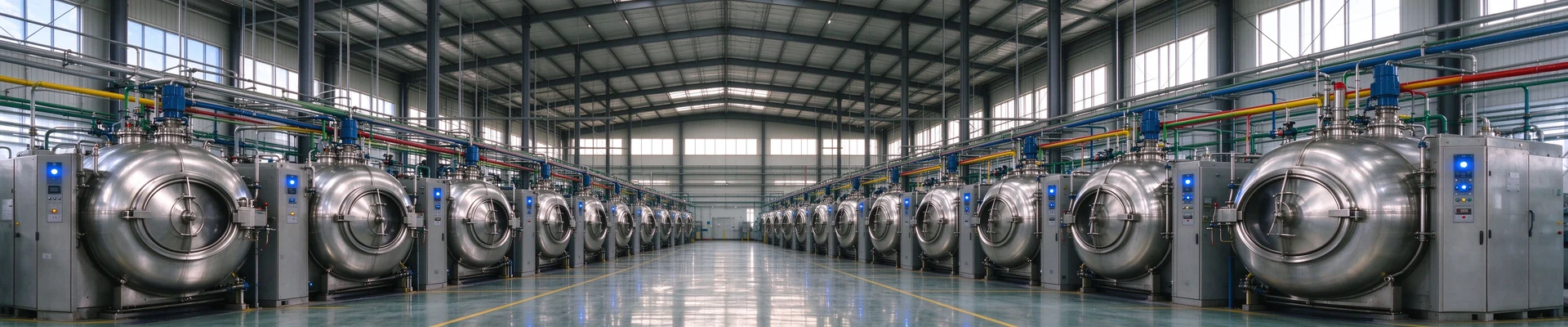
From a single dyeing computer to an entire dyeing and printing smart factory, products are organized along four lines: "Control - Management - Delivery - Whole Plant".
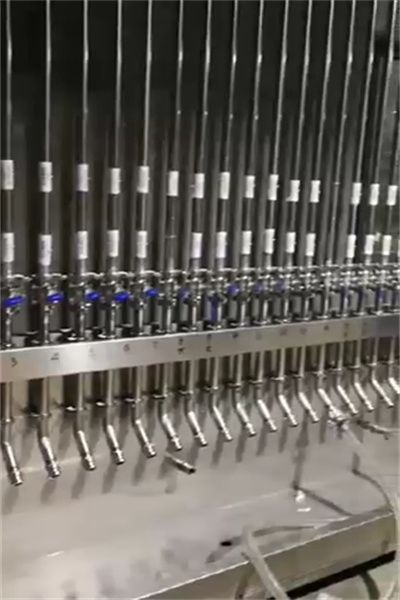
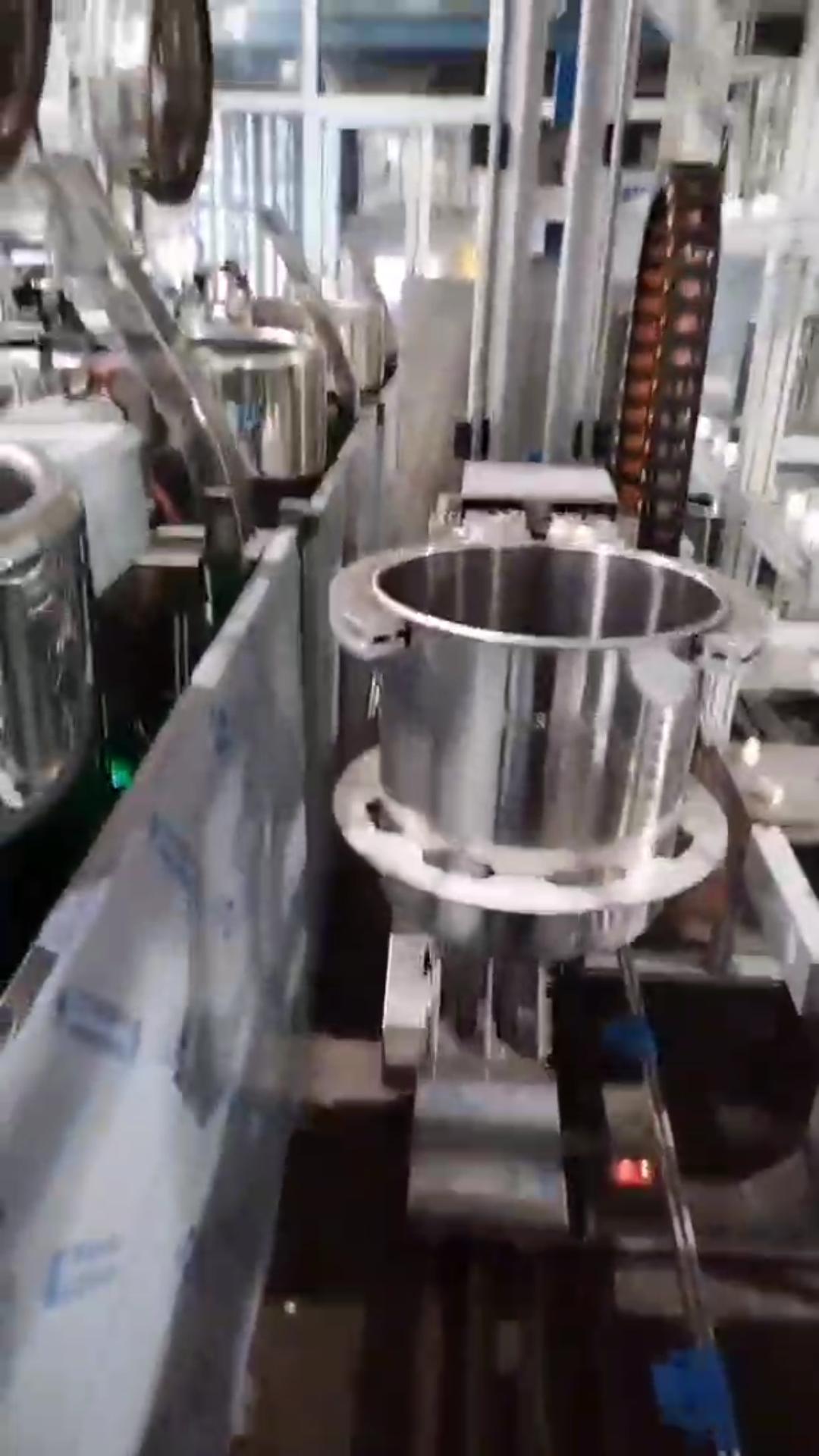
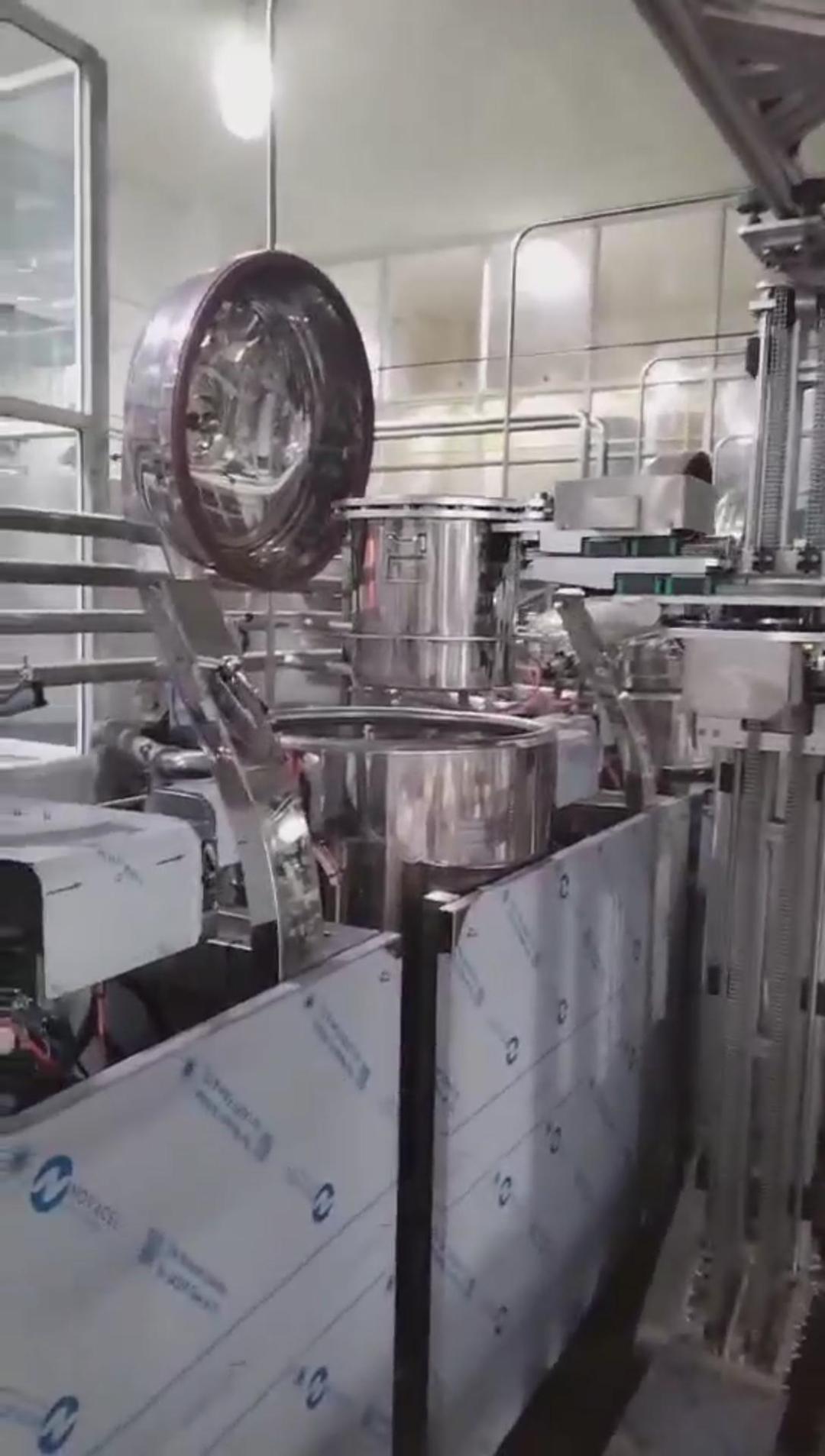
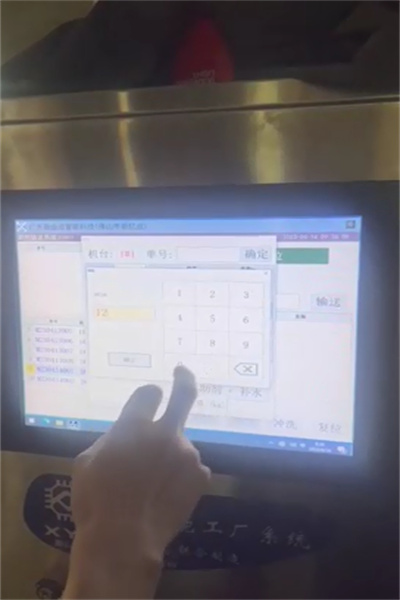
NES Auxiliary Feeding Unit — On-Site
Technical Advantages
The real difficulty in dyeing control does not lie in「Can it be controlled」,but stability, reproducibility and maintainability under long-cycle operation.
Core board, I/O, communication and display are layered and decoupled, so a single-point fault does not spread and spare parts can be replaced without returning the whole machine to the factory.
Using historical batch data to correct heating/cooling and dosing sequences, veteran technicians' experience is distilled into reusable process templates.
300mW Low power consumption reduces temperature rise inside the cabinet, and wide-temperature components suit high-temperature, high-humidity dyeing workshops with minimal long-term drift.
The swarm control operating system makes vats in the same workshop run at a unified rhythm, with centralized recipe distribution reducing lot-to-lot differences and waiting time.
Supports integration with central control, MES and ERP, with automatic upload of production data and no need for manual re-entry.
Once connected, the manufacturer can remotely view operating status and alarm records, so common issues need not wait for an engineer to arrive.
System Architecture
Dyeing computers + central control system + dyestuff and auxiliary delivery + warehousing form the complete closed loop of NES4.0.
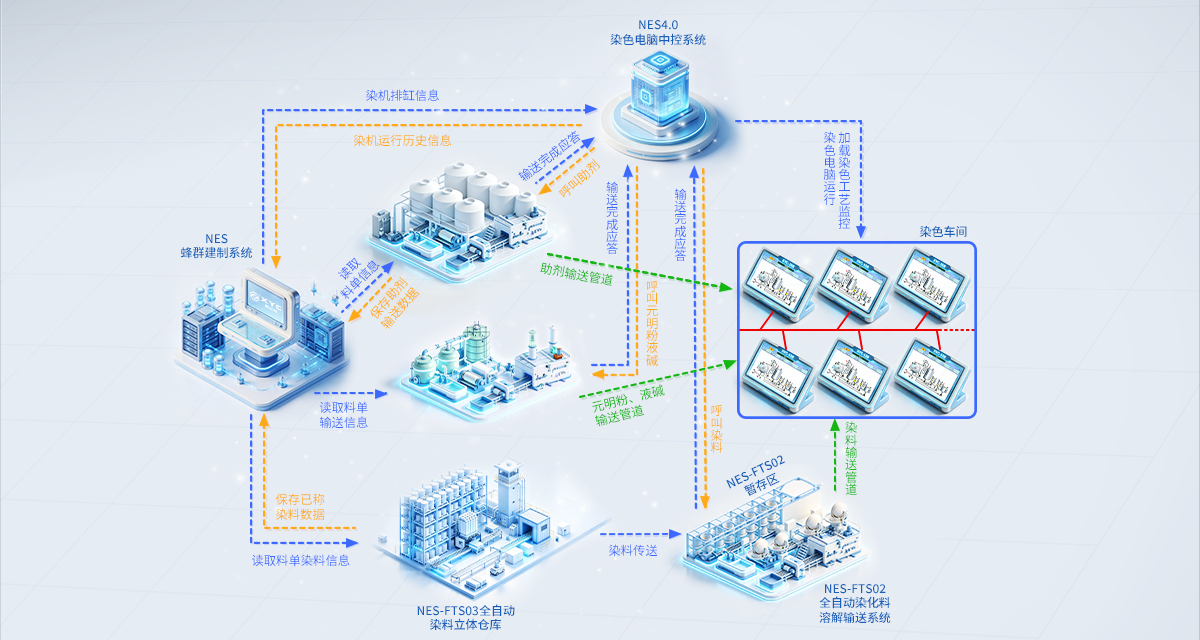
NES-FTS01 Dyeing & Printing Industry 4.0 unmanned smart factory - full-process data closed loop
Real-operation footage
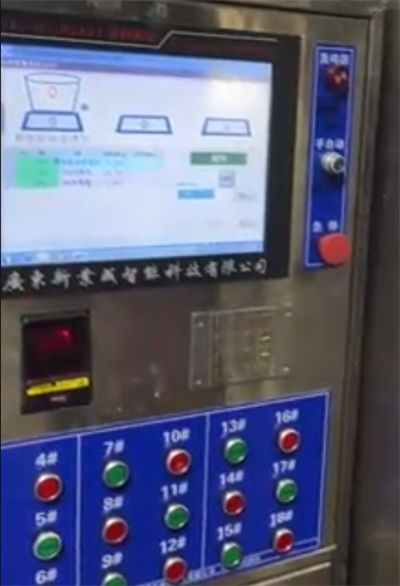
From loading into the vat, heating, dosing, to fabric discharge, watch this equipment's operating status and work rhythm in a real workshop.
Recommended Products
Need a configuration list tailored to your workshop?
Inform us of the number of dyeing vats, fabric types and current control method, and we will provide a selection table and phased investment recommendations.