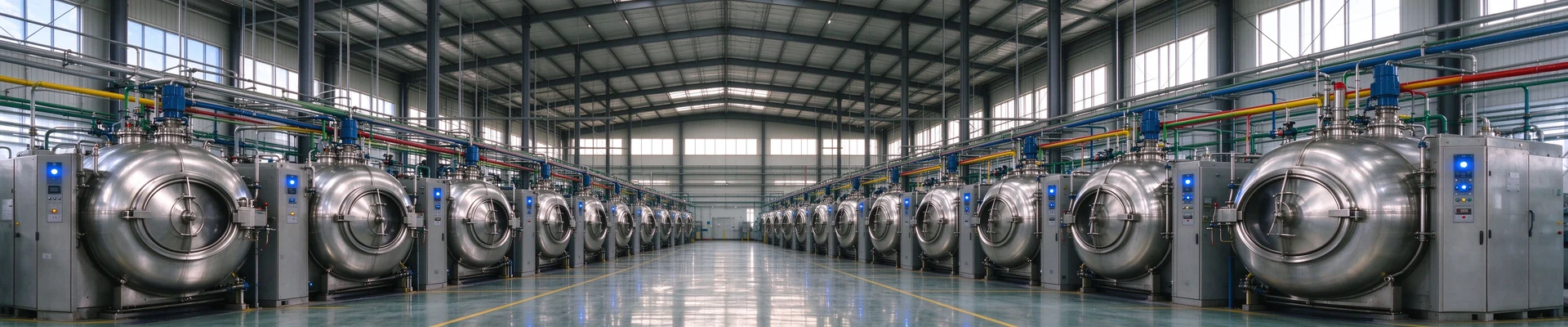
NES embedded system(dyeing) computer
From a single dyeing computer to an entire dyeing and printing smart factory, products are organized along four lines: "Control - Management - Delivery - Whole Plant".
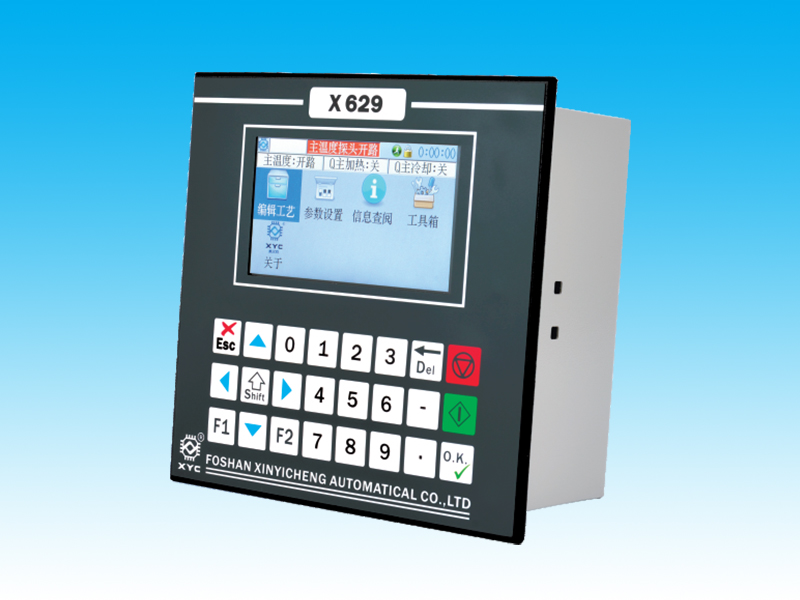
X629 Colour-Screen Dyeing Computer
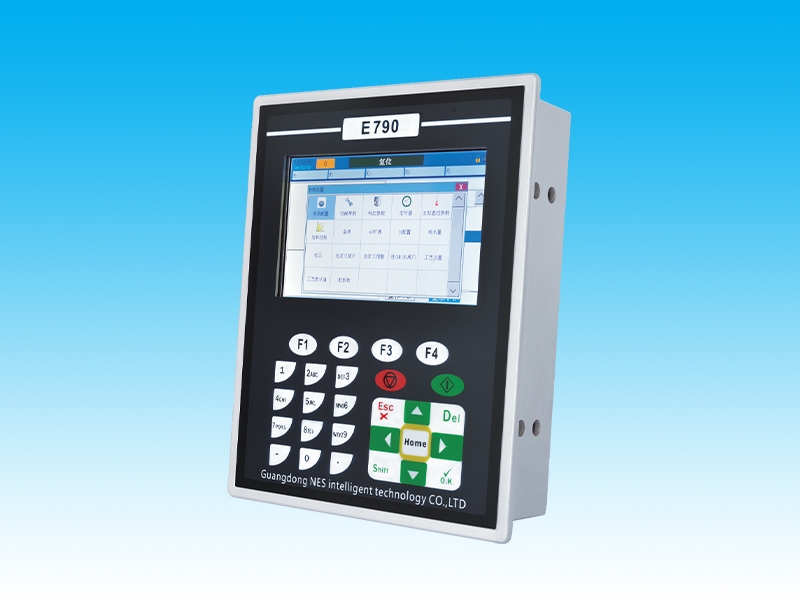
Friendly Reminder: This controller was developed in 2010. At present, we only provide repair services and offer limited quantities of new units. For new units, the E528 or E529 can be selected as replacements—featuring new technology, new productivity, and new quality, with even better value for money. We welcome your order!
Product Attributes
Below are the core technical parameters and configuration specifications; please inquire for the complete specification table.
No. | Item | Specification / Attribute | Advantages & Features |
1 | Display | 4.3-inch TFT colour display, 480×272 dots | Clear display, supporting Chinese/English, numeric and symbol display; intuitive interface, easy operation |
2 | Main control unit | CM3 high-performance processor | Strong processing capability, stable operation, fast response |
3 | I/O interface | 2 PT100 inputs, 1 4~20mA input, 2 4~20mA outputs, 12 relay outputs; IO supports DIY custom settings; 1 RS485 monitoring communication port; 1 USB port | Flexible interface configuration with customisable IO; parameters and recipes can be copied and software versions upgraded via USB drive for convenient maintenance |
4 | Recipe programming | Up to 99 dyeing recipes with 99 steps each; supports numeric and symbol input | Large recipe capacity and flexible editing, meeting diverse dyeing process needs |
5 | Working power supply | AC 90~250V, 50~60Hz, power consumption P | Wide voltage adaptation range, low power consumption, stable operation |
6 | Operating environment | Ambient temperature 0~55℃ | Suitable for common industrial site environments |
7 | Dimensions & installation | Body size 168 (W) × 168 (H) × 100 (D) mm; cut-out size 151 (W) × 151 (H) mm | Compact body with clip-in installation, convenient for flush mounting |
Technical Advantages
The real difficulty in dyeing control does not lie in「Can it be controlled」,but stability, reproducibility and maintainability under long-cycle operation.
Core board, I/O, communication and display are layered and decoupled, so a single-point fault does not spread and spare parts can be replaced without returning the whole machine to the factory.
Using historical batch data to correct heating/cooling and dosing sequences, veteran technicians' experience is distilled into reusable process templates.
300mW Low power consumption reduces temperature rise inside the cabinet, and wide-temperature components suit high-temperature, high-humidity dyeing workshops with minimal long-term drift.
The swarm control operating system makes vats in the same workshop run at a unified rhythm, with centralized recipe distribution reducing lot-to-lot differences and waiting time.
Supports integration with central control, MES and ERP, with automatic upload of production data and no need for manual re-entry.
Once connected, the manufacturer can remotely view operating status and alarm records, so common issues need not wait for an engineer to arrive.
System Architecture
Dyeing computers + central control system + dyestuff and auxiliary delivery + warehousing form the complete closed loop of NES4.0.
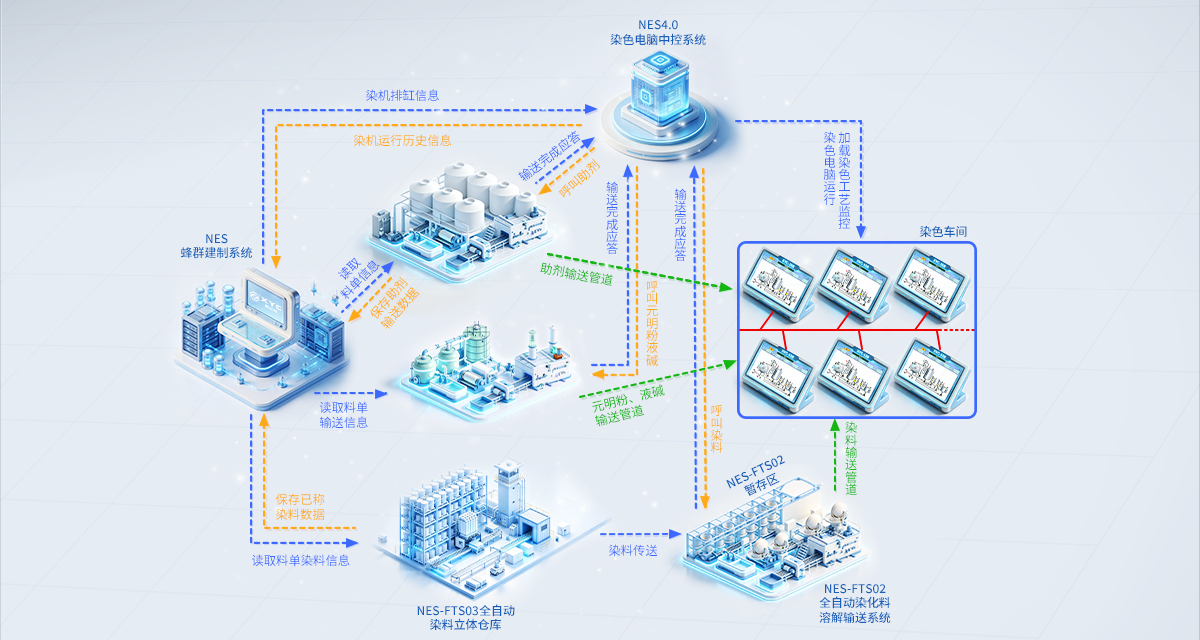
NES-FTS01 Dyeing & Printing Industry 4.0 unmanned smart factory - full-process data closed loop
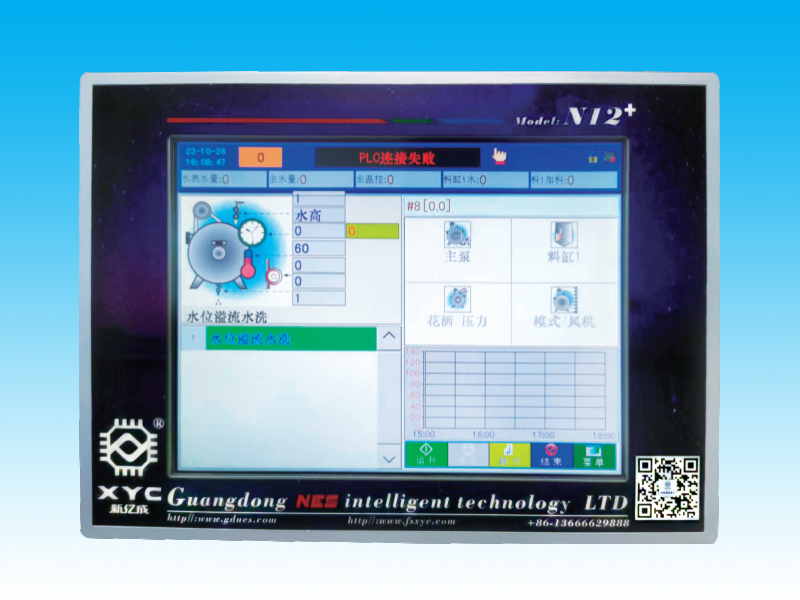
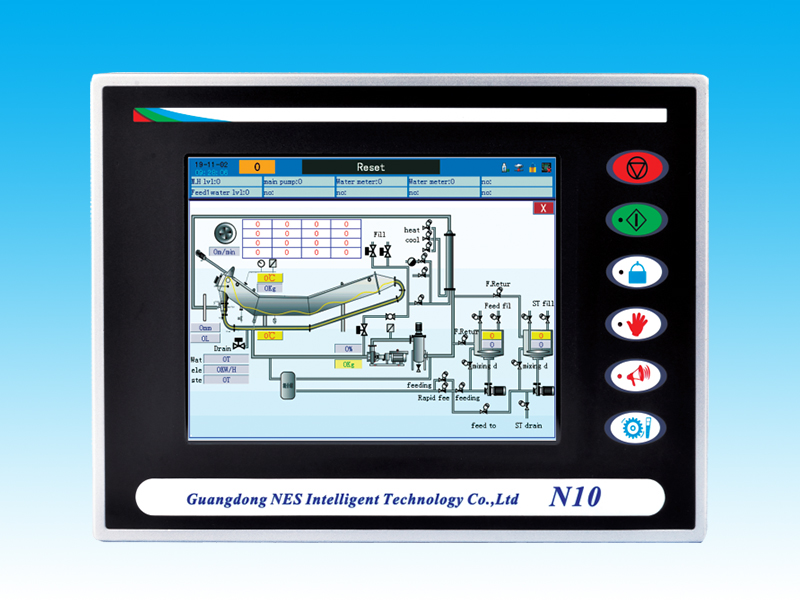
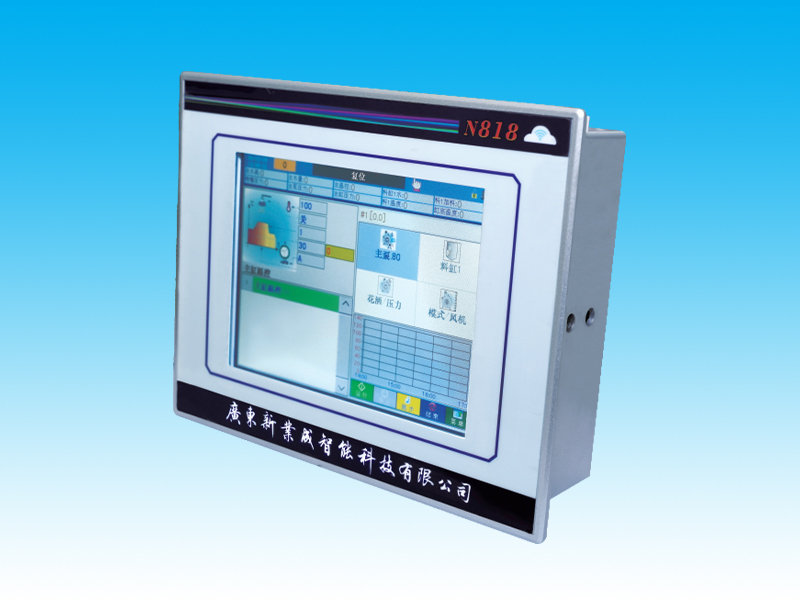
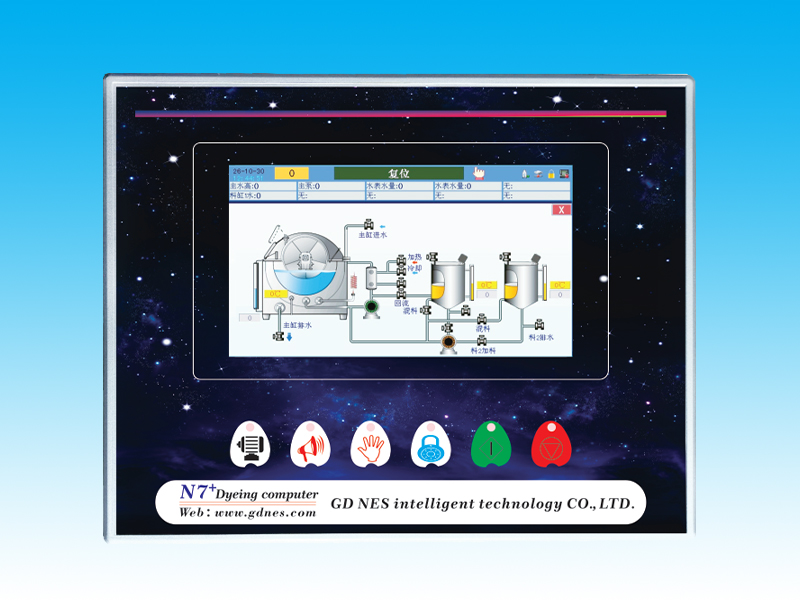
Recommended Products
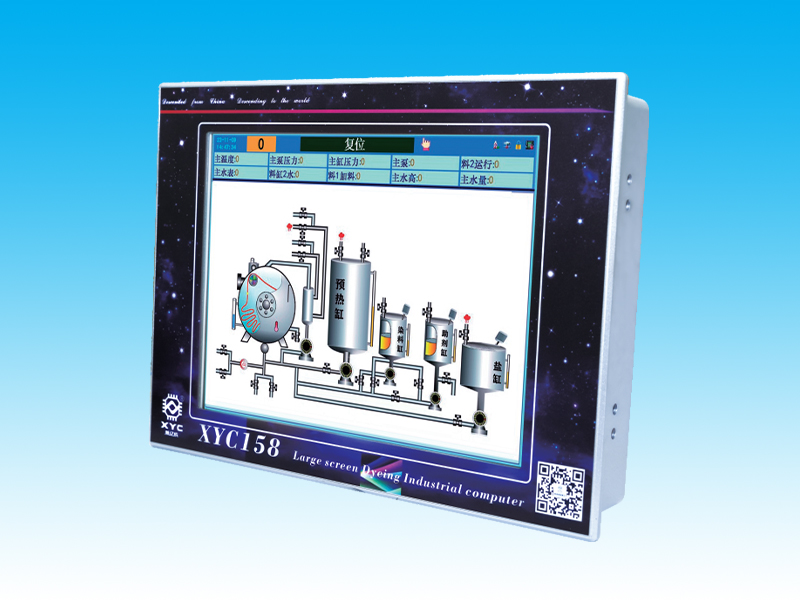
Need a configuration list tailored to your workshop?
Inform us of the number of dyeing vats, fabric types and current control method, and we will provide a selection table and phased investment recommendations.